Powered By Blogger

Sunday, June 7, 2020

Is poverty a factor of population? Are we digging a deep grave?


When you hear the word "Poverty", the first images that cross your eyes are possibly, people with limited to no food, no shelter or a broken/make shift so called home, wearing torn or battered clothes etc.

This picture is certainly painful to see and yet in this 21st century many parts of this world has people living in these extreme poor conditions. The disparity between ultra rich and poor has only increased.

Did we ever think what could be driving this? Is there a solution to bridge this gap?

Our world has been adding anywhere between 80 to 85 million individuals (check this interesting web-page - World Population Clock). This means every 10 - 12 odd years we shall be adding a billion mouths to this world.

An interesting view

Courtesy: -  https://www.worldometers.info/world-population/

A few things will still remain finite (from a total availability perspective) like land mass, natural resources (minerals, water, forest cover, etc.). Unfortunately many of these are depleting at a much faster rate than ever before.

If the above is the reality,

1. Will we have enough for everyone to eat?
2. Will we have enough space for everyone to stay?
3. What is that year or period in time, when we will have nothing more to consume (natural resources)?

Tough questions and may haunt us just thinking about that day

Population boom and increase has been a way to create more demand for goods and services, leading to economic growth. However the same population is also creating a grave situation (has already created) in the future.

I will try and share my views via this representative ultra simplified example

Let's assume there are three four bands in the population based on wealth. Numbers are all just a representation to elaborate

Let's also assume an average family size at each of these bands (as illustrated in the table below). One can clearly see the gap in what an average family member has got to spend.


Assuming a population growth of 2% a year across the band (which typically is not the case). The reality is bottom bands growth rate is higher. I am also assuming an income growth of 5% a year across the bands.


What we observe from the above at a high level are:

1. The growth in resources available for individuals in the higher bands is significantly higher
2. Population will grow faster (growth rate) in the lower bands
3. Disparity will only grow bigger with time

The interesting dichotomy of this situation is Poverty will drive Population and then the same will increase poverty. Typically the thought is that more earning members will mean more income (hoping to alleviate poverty) , but then the million dollar question is what will be that income like? 
Without resources like nutritious food, medicines, education to support, etc. the vision to earn and live better becomes a mirage.

The above is only a simplified illustration but the real problem is looming and is waiting to explode.

We may like it or not, but some serious thought and soul searching needs to be done. It is a sensitive topic but it can be a ticking time bomb waiting to explode.

Would love to hear what my friends think.


Sunday, May 3, 2020

A new world in many ways - transformations post COVID pandemic


COVID-19 is not the first pandemic that the world has witnessed in the recent times. What makes this different and possibly the first ever are:

1. The spread of this infection has gripped more than 150 countries, rich or poor
2. Economies of all countries coming to a near grinding halt or severely getting impacted
3. Billions of people around the globe being locked up in their homes to reduce the spread and break the chain. India a country of 1.3 billion being locked for more than 40 days now
4. Exposed the healthcare system of many advanced economies which were not prepared for this invisible enemy
5. Aviation, railways, road transportation of all major countries were operating at around 10-15% of their capacity (movement of essential goods). Rest all were grounded.

There are many more. 

What will change beyond this? What can be it's impact (if any)? How will industries, companies and economies cope up?

I have been thinking, observing some of the "New Normal" over the last 40 plus days and wanted to share my thoughts with all.


Manufacturing and logistics sector:

A large part of global manufacturing was moved to China during last 2 decades in order to cut cost and achieve economies of scale. This created a huge dependence on this country. Any disruption like this pandemic has exposed the whole supply chain.

JIT and lean manufacturing has also exposed stock out situations of even essential goods and many critical items.

With interstate or inter-continental transportation hit hard, strategies on last mile logistics has become an absolute must. How to supply goods and service to the millions of citizen and keep the lifeline going will be a question to ask?

1. Alternate sources will now be scouted and there will certainly be some focus on this
2. Near shore manufacturing will be encouraged and being self reliant may become the need for future
3. Local manufacturing and distribution will be another area which may make a comeback
4. More emphasis will be given to app based/on-demand delivery/logistics which is more predictable delivery timelines with possibly being near sourced
5. Last mile delivery and logistics solution will be in demand and employment opportunities will grow

Will this happen overnight? No. Will some of this happen in some countries? Absolutely.

Banking and Information Technology sector:

The banking sector for a while has been going digital and need for cash, meeting a banker, visiting a branch are slowly getting diminished.

The lockdown just reinforced this more and we will see this trend continuing and becoming more virtual. Just think, when did many of us visit a bank to get something done?

Information technology sector has had a mix of working from home and working from office for a while now. In India, this was more skewed (working from office was the norm). 

1. Digital payments and online/app based banking will be promoted and will only become more prevalent
2. Cashless and contact less transactions will be more acceptable
3. Working remotely for IT professional will become a new way of life. Companies will not invest in office spaces and employees may visit office on a need basis or by rotation
4. Telecom and communication businesses and enablers will find new way to foster collaboration, find innovation to help users work and perform even at lower bandwidth
5. Higher internet bandwidth and need for this will grow

 
Transportation, Hospitality, Automotive and Aviation sector:

This sector has taken a big beating and is wiping out jobs across the globe. There may be some significant changes to these sectors and business models may change

1. Business travel will sharply decrease as remote/virtual meetings have been working fairly well. This is also able to save a lot of cost
2. Passenger volume of airlines which banked on business travelers will now see lower numbers
3. There may be a need to innovate and think of how passengers can safely travel in the skies compacted in a vessel
4. Hospitality industry will see a lull for a while and will see growth once people feel safe to travel and want to spend on vacations. Job losses across the sectors will only make it worse
5. Rental and app based transportation will see a slowdown as people may feel uncomfortable to use them for obvious reasons. This model will stay as new normal in terms of person conduct is defined. Some changes will certainly need to be enforced from a safety perspective
6. There may be an increase in operations of personal vehicles, but this will be countered based on less number of people needing to travel and go to work


Healthcare sector:

This sector has witnessed different challenges with growing and aging population, increasing cost of service,  lack of 'Qualified' professionals etc. This pandemic has brought in a different challenge for them

1. How to save more lives with limited resources
2. How to protect oneself while serving others
3. What protocols need to be altered in case of more deadly contagious diseases surface in the future (if that happens)

and many more

What this sector may see are

1. Balancing between telemedicine and out patient services
2. Advanced diagnostics and testing mechanism that a patient can do from home instead of coming to a clinic
3. Management of sick and potentially sick patients when they visit a hospital or clinic
4. How to quickly change the configuration of a fixed capacity hospital based on the need for certain services e.g. creating ICUs, isolation rooms, operation theaters etc.
5. How to ensure consistent supply of essential equipment, protective kits, etc. in case of any disruptions
6. Ability to scale man-power and staff in case of a disaster


Education sector:

This sector will innovate and transform the most

1. Schools and colleges will possibly promote remote/video conferencing to teach students
2. Self learning sessions will be given a boost
3. Students now can choose the school from their home and not need to be in that city anymore
4. Cost of education may also go down as infrastructure in large cities where schools and colleges spend a lot of money building large campuses


Whether the above will hold good or all will be back to how it was in 2019, only time and the length of this pandemic will tell.

What this crisis has certainly taught all of us is 

1. Being more compassionate to each other
2. Being able to live within limited resources and movement for a longer period of time
3. Acknowledging the need to put more thrust in healthcare systems and personal hygiene


Would like to hear comments and thoughts from all who took the time to read through this long post.

Lets create a better and healthier tomorrow


Sunday, February 16, 2020

It is all about - FOCUS

Everyone around talks about the need to 'FOCUS' in what one does, be it your boss, be it your subordinates, parents to their kids etc. All we hear is to focus, focus and focus.

The key here is to understand what does it actually mean when someone tells to 'Focus'? Why is it important to focus?

I am sure it is a simple 5 letter words and most of us know the literal meaning of the same. One of the meaning that Merriam-Webster explains is 'directed attention'. Here is my attempt to expand these 5 letters and see if this can make it simpler to interpret or complicate it

F - Firm Determination/Mind

When you want to achieve or get something done, the key is to make your mind up. Determination to get to the goal is an absolute must. Without this, your pursuit to get into the known or unknown starts with a weak foot.

O - Operate with Obstacles

Roadblocks or challenges will be there. They are a part of learning and trying to get to one's objective.
The key is to ensure that one does not give up with upcoming challenges and be prepared to handle them. You can only do things well when you have accepted the challenge and only work towards the final goal.

C - Creativity

There are 'n' ways to reach a goal. Everyone follows their own instinct and known paths to meet the objective. As work becomes mundane and one still needs to complete the same, the best way to keep going is to bring in one's creativity and find an optimal / efficient way to achieve it.


U - Unleashing your past

We all have done work in one way or the other. However every organization, group, project, stakeholder can be a bit different. Their expectations can differ. Sometimes our past experiences and way we perceive things become our biggest challenge in getting things done effectively.

S - Sense of time

You can get things done within a finite or an infinite time frame. The key for someone to be successful and be effective is to align with a sense of time/urgency. Time is of the essence when something was supposed to be completed yesterday.
This does not mean that you compromise with quality.


Why is it important to FOCUS on any activity assigned? 

It is one thing to do your work and a completely other thing to get things done right. 
When you focus, your work speaks for itself, you learn more and your quality is impeccable.

“Concentrate all your thoughts upon the work at hand. The sun’s rays do not burn until brought to a focus.” - Alexander Graham Bell


Wednesday, December 25, 2019

Success is "Relative", Experience is "Eternal"

We have all heard people, friends, relatives often saying that 'he is so successful', 'she has achieved a lot' and so on. This comparison has been explicitly or implicitly present at various levels in our society or organizations.

Interestingly, this comparison is about wealth accumulated, position(s) held, property owned etc. No one cares about what kind of an individual is behind all this.

Have we ever analyzed what does this do to us? Possibly unnecessary pressure, bitterness at times, unhealthy competition etc.

Questions that get to our mind. What can I do about this? Can I prevent what the world around me perceives? Can I change a lot? so many of them.

Let's think of a scenario which I think many of us can relate to. Two individuals have been given two different projects or objectives to meet. 

Person A get a project that get complicated and gets slammed with difficult situations. This leads to long hours at work, tough decisions to make, delayed delivery, managing and motivating a near burnt out team. On the other hand Person B get a project which sets off on a smooth ride, does not get into any road blocks and gets completed on time.

What does this tell us? Oh yes, Person B delivered it and was successful as expected. Person A feels miserable and possibly had to do many explanations.

What we forget
1. Both have learnt from their situations
2. Possibly A got pushed into the difficult situations and got more experience in managing and pulling out things from a ditch
3. A's experience has possibly made him/her a stronger person
4. Under a similar situation in the future, A may come out with flying colors

It is key to know that your experiences and learning from situations will never go away. It is real. I did share my views on a similar topic earlier. Our Priorities. There are various way to reach to a given goal, each route provides different experiences and brings a different you at the end.
Take another scenario, friends A and B both plan to join a premier college and have to write a test. A has been preparing for the test and got support from others. A passes on the first attempt and is happy, friend B wasn't able to qualify. In this process, B understand his limitations and get the experience on how better preparation needs to be done. Next time B qualifies too.

Success can have different paths, can have different definition for each. What we forget in the drive to be successful is the experience gained. Experiences cannot be lost, it just adds to the improvement of an individual.


Thursday, October 31, 2019

Travel Diaries - Khmer Empire - Cambodia

South east Asia and the Indian sub-continent have seen the rise and fall of mighty Empires and Kings who have been able to build large temple complexes and monuments to showcase their might and power.

My travel took me to get a glimpse of the Khmer empire (9th through early 15th century). Also know as the Angkor empire, the word 'Angkor' is derived from the Sanskrit word nagara, meaning "city". Angkor period began in the 800s, when the Khmer Hindu monarch Jayavarman II declared himself as a "universal monarch" and lasted until the late 14th century.

The Khmer rulers constructed some of the world's most magnificent architectural masterpieces (temples) and built large water reservoirs called Baray to hold water for its people and support agriculture. Starting with Yasovarman I until Indravarman II, they kept adding and creating marvels.

Most of us have heard about the famous 'Angkor Wat', but I wanted to know more about the other marvels and get a glimpse into present day Cambodia. To my luck, I was able to connect with Asean Angkor Guide team. During my email exchanges (yes you heard it, just email exchanges), I realized Raksa and his team would be the right people to show me what I wanted. 

A quick 45 minutes of flying time from Bangkok took us to Siem Reap, the city closest to Ankor Thom, the walled city built by possibly the greatest of the Angkorian kings - Jayavarman VII.

Day 1: 

We decided to relax a little and enjoy the local hospitality after a couple of flights and a night with little nap time.
The Le Meridian Angkor did not disappoint us. The open design, warm hospitality of the staff and grand pool helped us sail through the day. A trip to Artisan Angkor and Made in Cambodia street market in the old city was a nice way to wind down the evening.


Day 2:

After having a heavy breakfast (knowing we will need to walk and climb up stairs), ensuring we are comfortably dressed and mentally ready to enjoy the tropical warm day with lots of sunshine and blue skies (we were lucky), we started with the Bayon temple. Bayon is known for its rich decoration and showcases various expressions of Buddha. Its multiple levels structure and various face towers amazed us. Face towers of the Bayon represent the king as the Bodhisattva Lokesvara


Our next stop was Baphoun. It is located in Angkor Thom, next to Bayon. It is a three-tiered temple dedicated to the Hindu God Shiva. The temple measures 120 east-west and 100 meters north-south at its base. It resembles like a pyramid. In the late 15th century, the Baphuon was converted to a Buddhist temple. A 9 meter tall by 70 meter long statue of a reclining Buddha was built on the west end side.


A quick stroll through the ruins and courtyard of the royal palace (adjacent to Baphoun) meant we needed to refuel.


After a good Khmer cuisine (which we mostly had for lunch at local family run small businesses) we started the afternoon session.

With temperatures soaring and humidity at more than 85%, we started to walk into the huge complex of Angkor Wat, the largest Hindu (Vishnu) or religious temple ever build. The nine tower represents the Nava Gruha (nine planets) with the sun in the center. The temple is also a representation of Mount Meru, the home of the gods. The central towers symbolizes the five peaks of the mountain, and the walls and moat symbolize the surrounding mountain ranges and ocean.


Day 3:


We started our day by traveling 60 kilometers from Siem Reap to the Kulen Mountains. Phnom Kulen has major symbolic importance for Cambodia as it is the birthplace of the ancient Khmer Empire.

We spent some good time at the two waterfalls. What we saw after this was amazing. Kbal Spean is known for its carvings representing fertility and its waters which hold special significance to Hindus. Just centimeters under the water's surface over 1000 small Shiva linga carvings are etched into the sandstone riverbed. The waters are regarded as holy. It is unique to have such carvings on a riverbed.


Next was a walk to the Preah Ang Thom, which houses a large statue of Buddha. It was built in the 16th century. Preah Ang Thom is considered sacred and is the worshiping god for the Kulen Mountain.


After a lunch break and we got to see one of the most spectacular temple. The temple's modern name, Banteay Srei also known as citadel of the women or citadel of beauty. Banteay Srei is built largely of red/pink and yellow sand stones. Many carvings into the walls of the temple are related to Hindu gods.


Day 4:


What better can it be to wake up at dark, walk the long complex of Angkor Wat with just a torch to get a glimpse of the sun raise behind the horizon. To our surprise we were with hundreds of others who wanted this experience.


After this surreal experience, we continued our day by visiting Ta Prohm, the temple that got famous after the movie Tomb Raider. The trees growing out of the ruins are perhaps the most distinctive feature of Ta Prohm.


Next stop was the unique temple of Pre Rup. It is built using bricks and sandstone. Pre Rup was dedicated to the Hindu god Shiva. The temple's name also means "turn the body". This reflects the common belief among that funerals of royals were conducted at the temple.


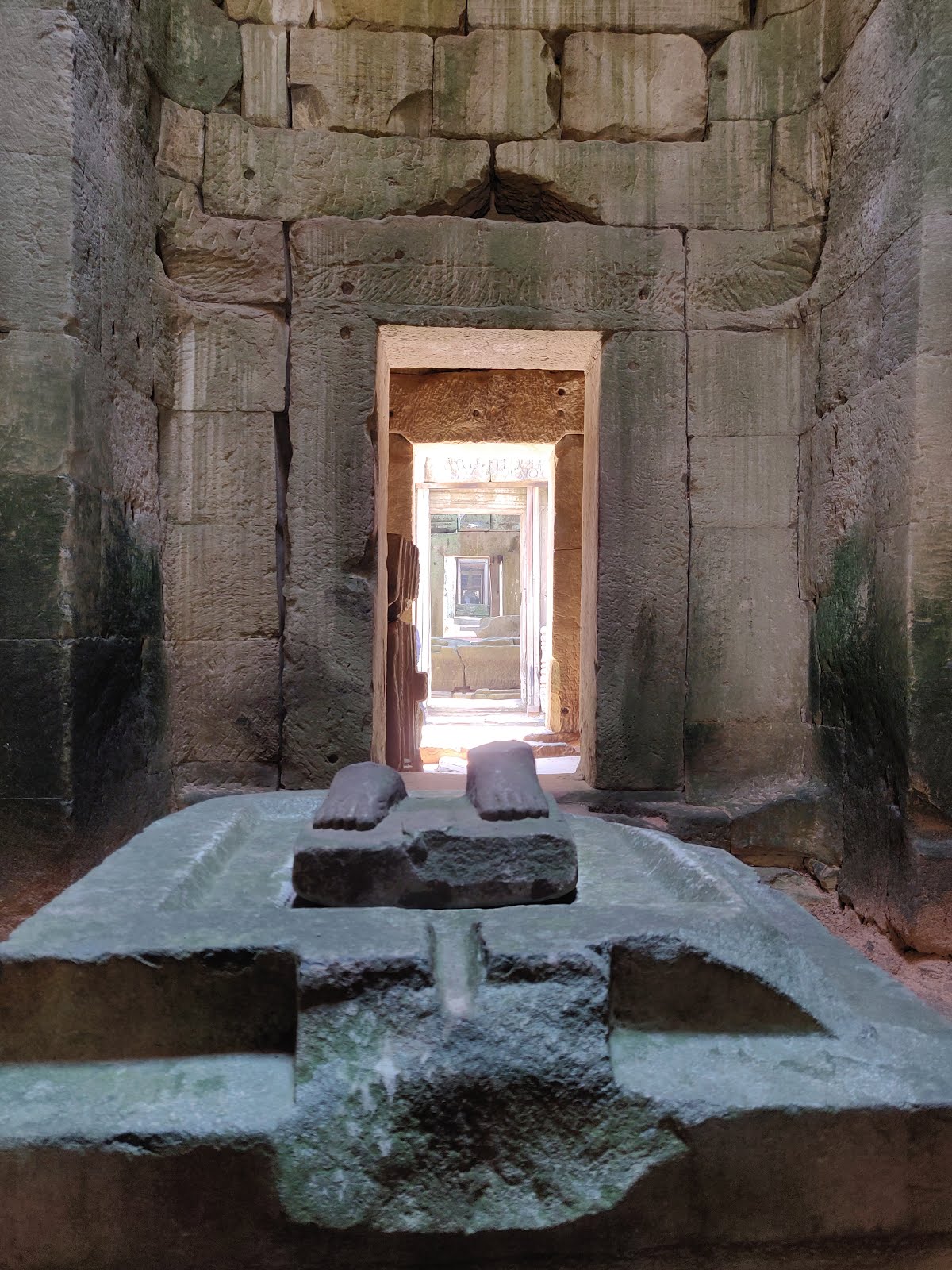
Moving from Pre Rup, we visited the Preah Khan. A massive temple which is mainly flat without many levels. Preah Khan has been left largely unrestored, with numerous trees and other vegetation growing among the ruins.


After an early start to day we decided to call it a day and take some rest. In the evening we attended the Phare Circus of Cambodia. This was a treat and seeing the local talent performing was a pleasure.

Day 5:

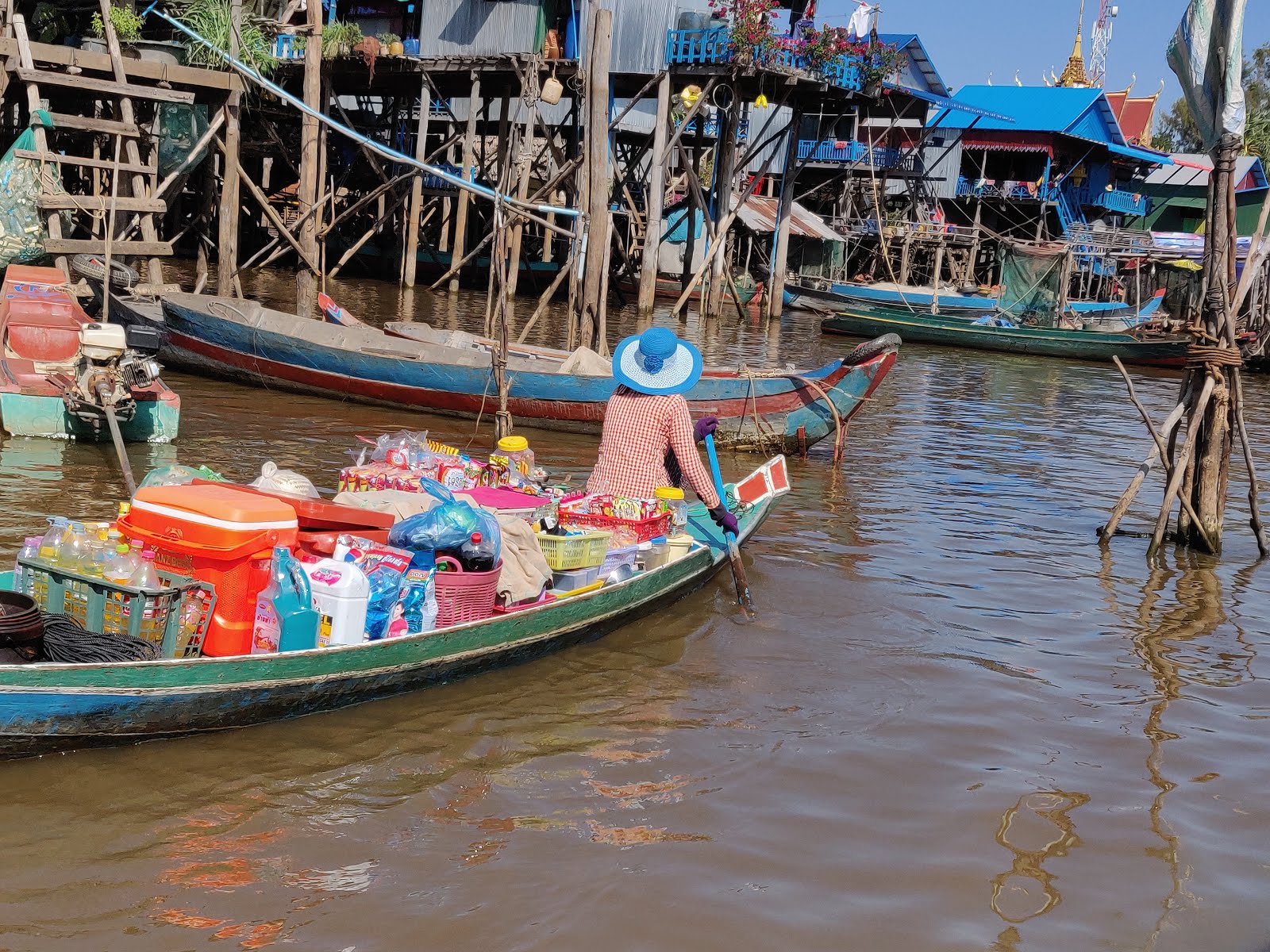
We started the day with a boat and canoe ride to Tonle Sap and its mangroves. Tonle Sap is one of the largest fresh water lake in South east Asia.

The fishing village, small floating market and restaurants was an interesting sight.


After the water, it was back on the land and to see the last two temples of the day.

Beng Mealea was built as a Hindu temple, but some carvings depict Buddhist motifs. Its primary material is sandstone and it is largely unrestored, with trees and thick brush thriving amidst its towers and courtyards and many of its stones lying in great heaps.


Neak Pean was originally designed for medical purposes (the ancients believed that going into these pools would balance the elements in the bather, thus curing diseases). It is one of the many hospitals that Jayavarman VII built.


With many more to see, we had to call it a day and keep something for the next time. This trip made us think how powerful, knowledgeable and scientifically gifted our earlier generations were.

There is so much to see in this beautiful country. Here are a few tips that I would like to share based on my experience along with my family for anyone trying to visit Cambodia

1. Plan your trip in advance. Make sure you have a local guide or tour company. Highly recommend Asean Angkor Guide. They were professional, passionate and extremely considerate. If you looking for a customized tour based on your interest, they are awesome

2. Pace your trip. There is a lot of walking and climbing (if you want to see and understand details). I wouldn't recommend a 1-2 day trip if you have small kids.

3. Light and comfortable clothing and shoes are a must as you will walk

4. Since it is a tropical country, temperatures will be warm and humidity can be high. Please drink a lot of water

5. If you have liking for specific food, would recommend to stay in a nicer hotel which can cater to your palate

6. Please bring in US Dollar currencies and lots of them (smaller denomination). This is almost the default currency accepted. BTW they don't accept old and torn/weathered currency notes

7. Credit cards are not accepted unless you are in a big hotel and in select restaurants. Good news, the ATMs do dispense US dollars if you need it

This has been a life time experience for me and my family and I am sure many of you may like it.

Until next time Arkoun.